
about the artist
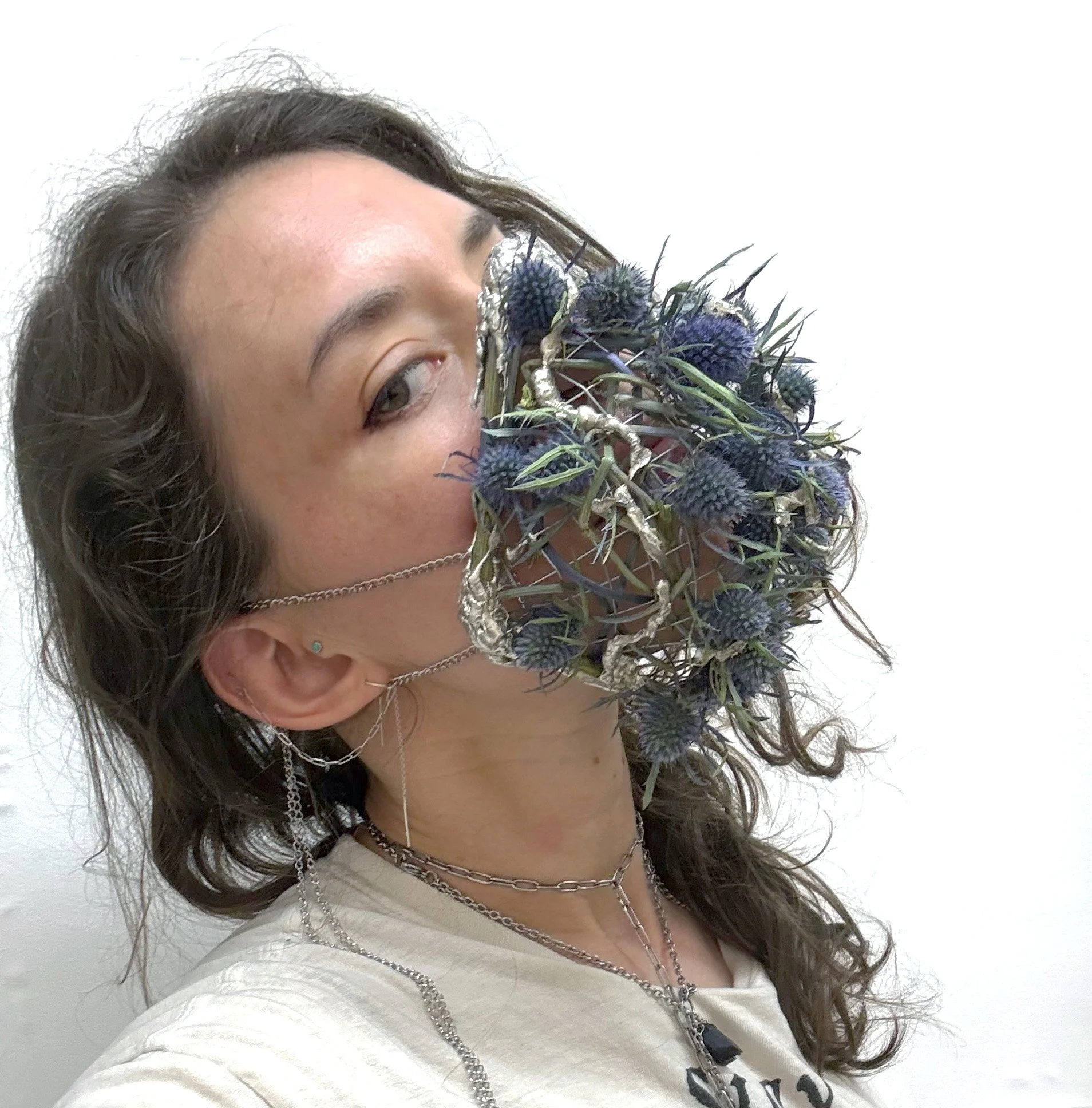
BIO
Amelia E. Foster is an American artist exploring the plasticity of memory and its subsequent influence on collective narratives and societal structures. Prior to art, she worked as an environmental microbiologist at Oregon State University, where she received her Bachelor of Science and Art. She was awarded the Rondo Residency in Mexico City in 2025, and the SVA Artist Residency Project in 2022. Foster has exhibited her work across the United States, including at PRACTICE Gallery in Philadelphia, Information Space in Philadelphia, FOCUS Art Fair NYC, Tunnel Projects for Miami Art Week, and others. Foster has given talks and workshops at the Mud BKLYN Ceramics, New York University, Columbia University, the Southern Harm Reduction Conference, and the Association for Conflict Resolution, amongst others. She currently lives and works in Brooklyn, NY.
ARTIST STATEMENT
My practice examines how bodies and systems are shaped through rupture, accumulation, and forced adaptation. Working across sculpture, drawing, and installation, I create forms where absence is structural. Openings, seams, distortions and mythologies hold what cannot be fully resolved.
Manipulating the fluidity between fragile materials such as graphite, pastels, and plant matter, and permanent ones such as ceramic, metal and stone, I investigate tensions formed where intuition and covert violence intersect. In my sculptural work, forms are fractured and sutured with solder, creating prosthetic seams functioning as both reinforcement and exposure. These interventions do not repair the break, but extend it and produce hybrid structures that exist between organic and engineered states. Negative space and shadow operate as active elements; perforations, gaps, and layered materials generate secondary forms through light, extending the work beyond its physical boundaries. Parallel to this, recurring folkloric imagery appears, functioning as parallel bodies that hold histories, instinct, and tension.
Informed by mysticism, philosophies of interconnectedness systems, and feminist material practices of embodied knowledge, I approach form as shaped by both visible and unseen forces. As Lucy Lippard writes in Overlay, attention to “the way things break and fit together” underlies these investigations.
Fracture is not failure, but a condition through which material reorganizes and evolves. Echoing the body’s process of evolving through complex histories, my practice functions as a gateway to memory, adaptation and resilience.
Ownership
I retain all rights to work I have created, including copyright and the right to make reproductions. The collector or buyer may not reproduce the artwork in any way unless they have obtained my written permission.